How Tall Can a Deck Privacy Screen Be? Height, Permits and HOA Rules
A privacy screen can turn an exposed deck into the most relaxing spot in the yard. Before you pick a pattern, though, there are three practical questions worth answering: how tall the screen needs to be, whether your town wants a permit, and what your homeowners association allows. Getting those answers first saves you from redoing work later.
This guide walks through each one. Rules differ from town to town and from one HOA to the next, so treat this as a checklist of what to ask, not a substitute for your local code.
How tall should a deck privacy screen be?
The right height depends on what you're trying to block, and from where. Start by sitting where you actually sit: the dining table, the lounge chairs, the hot tub, the grill. Note every spot where you can see a neighbor's window, yard or a busy street.
A few things to keep in mind:
- Seated vs. standing. Most time on a deck is spent sitting, and seated eye level is much lower than standing eye level. A screen that fully blocks the view from a chair may still leave a standing view over the top for taller people.
- Side views, not views from above. A screen blocks views across your deck. It won't block a neighbor looking down from a second-story window.
- You may not need a full enclosure. Many decks only need one side screened, or a short L around a seating area.
How tall is a PrivacyPlus+ screen once it's installed?
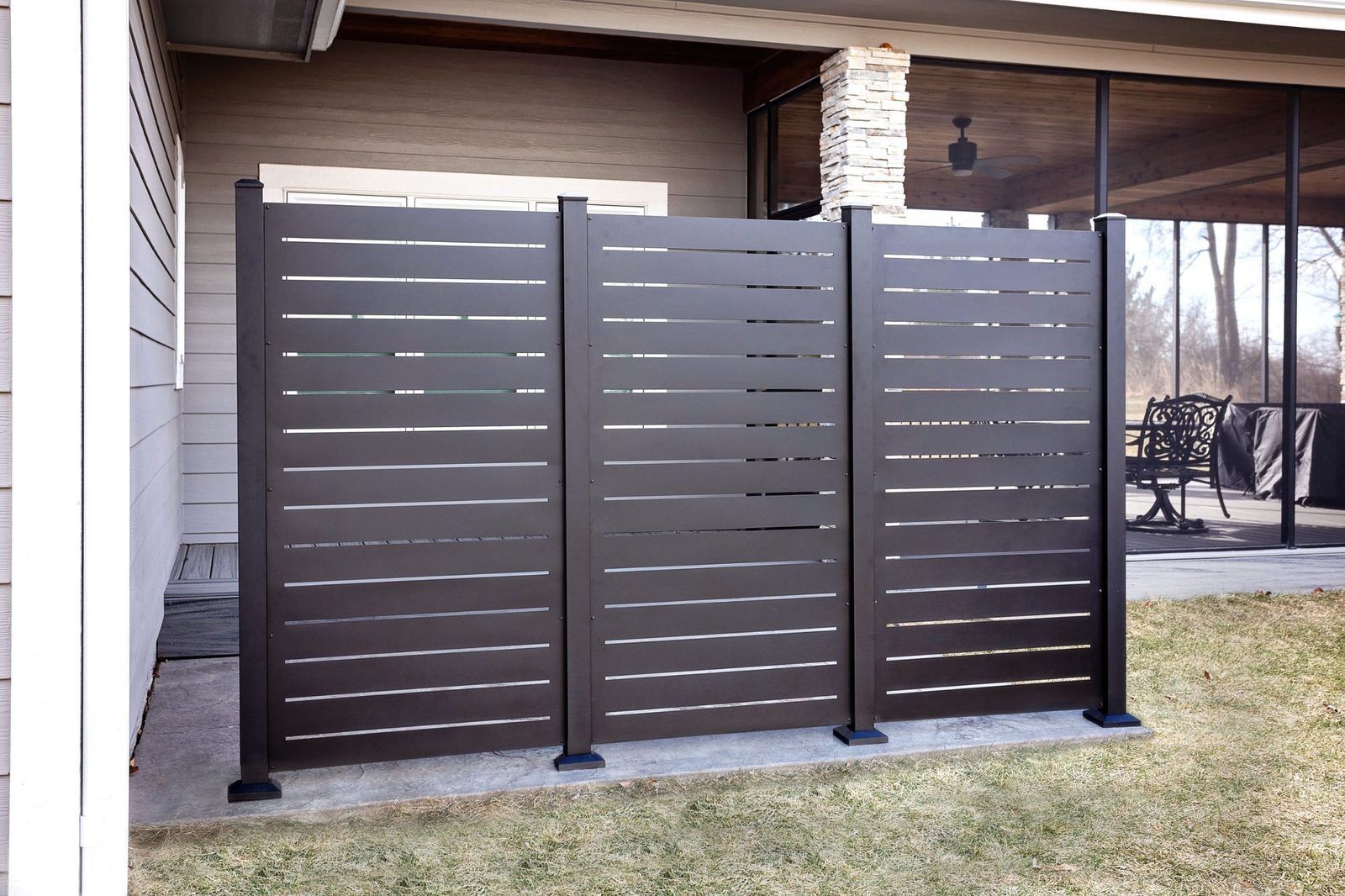
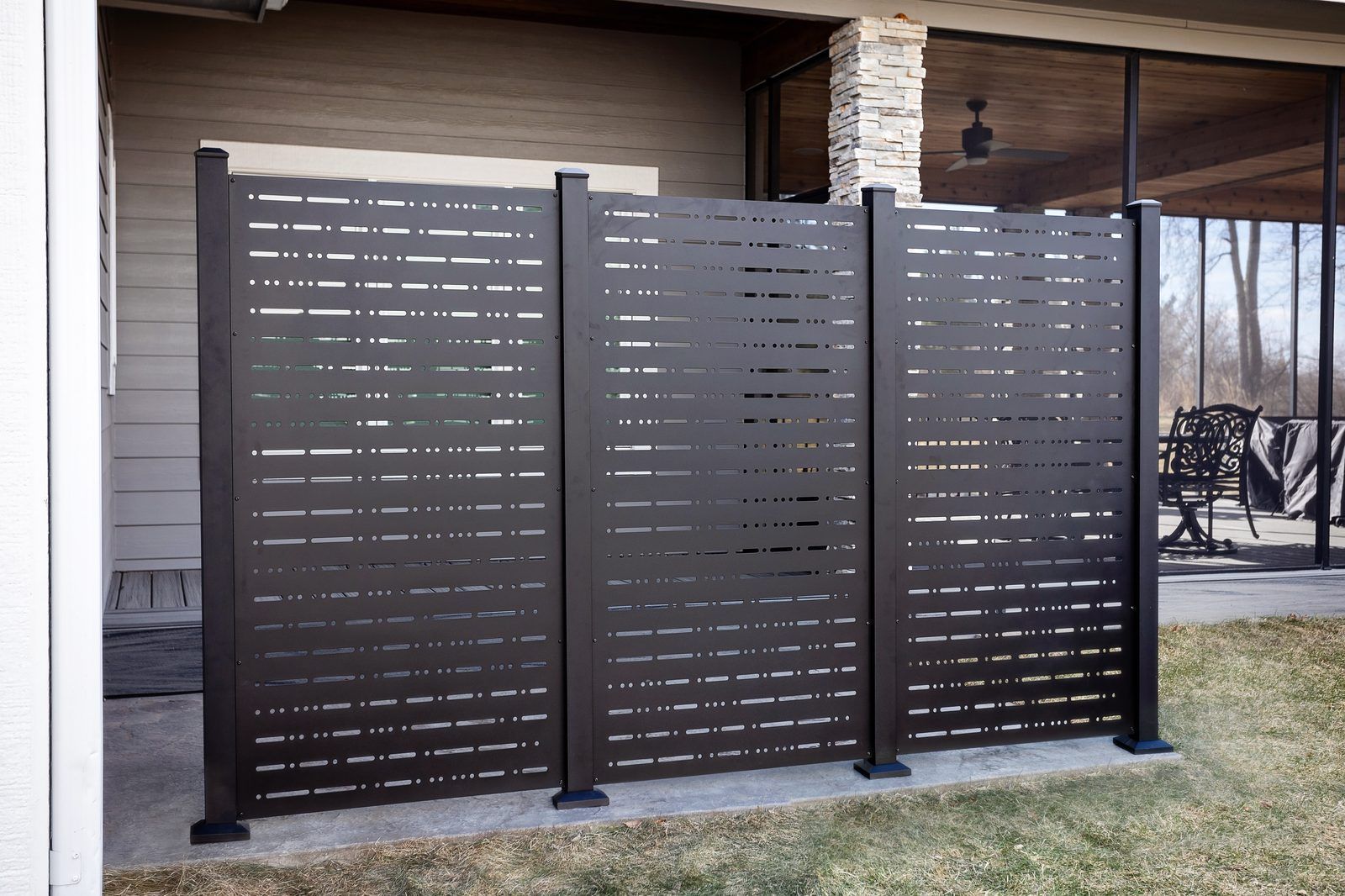
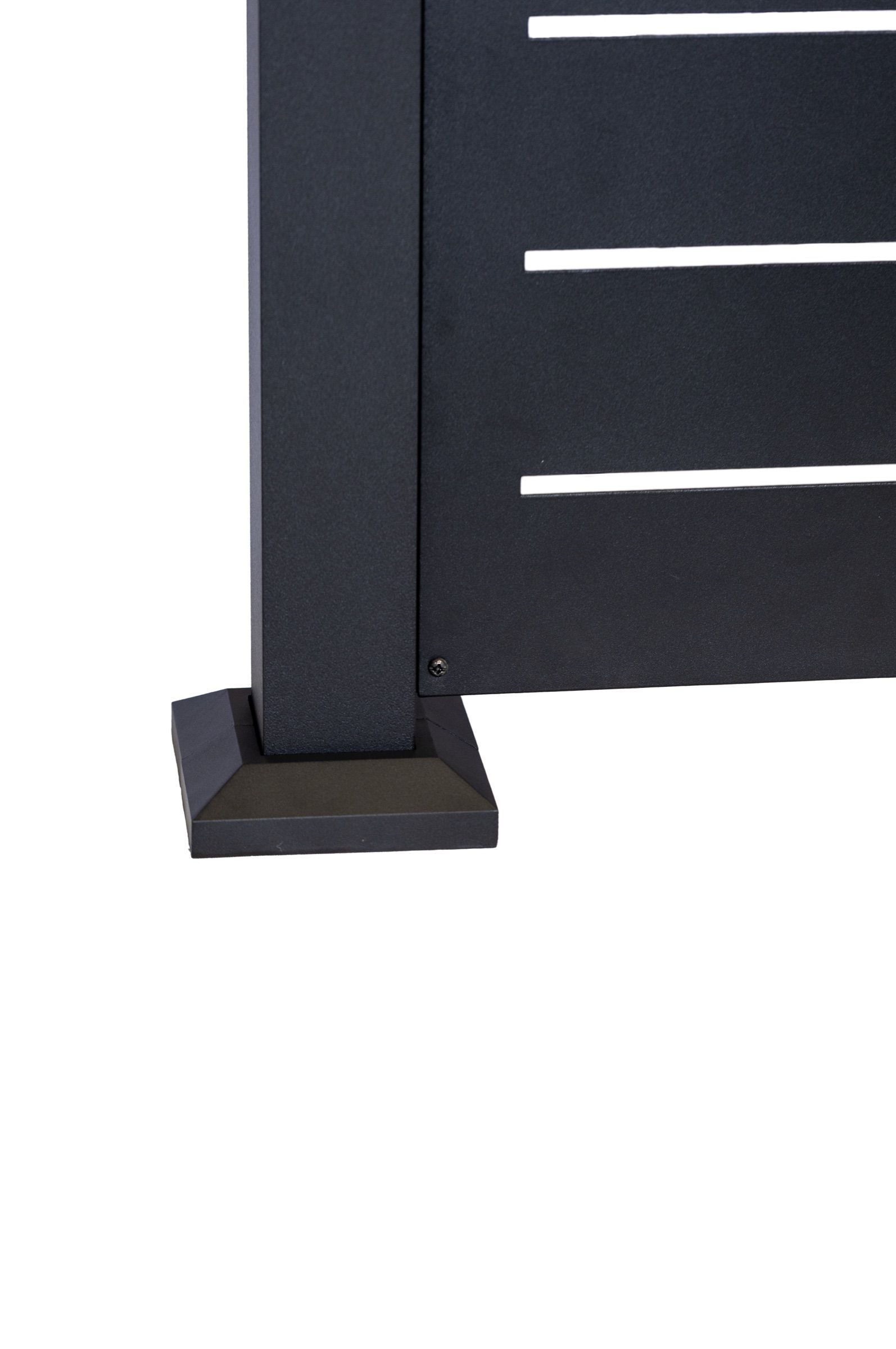
Every PrivacyPlus+ panel and gate is 68 inches tall. Panels attach to 72-inch posts and sit 2 1/4 inches off the deck or other mounting surface, so the top of an installed panel is about 70 1/4 inches above that surface.
That's the number to bring to your HOA or building department, along with the post height. On the deck, that height blocks side views for people sitting down, and for many people standing. Measure your own setup to be sure.
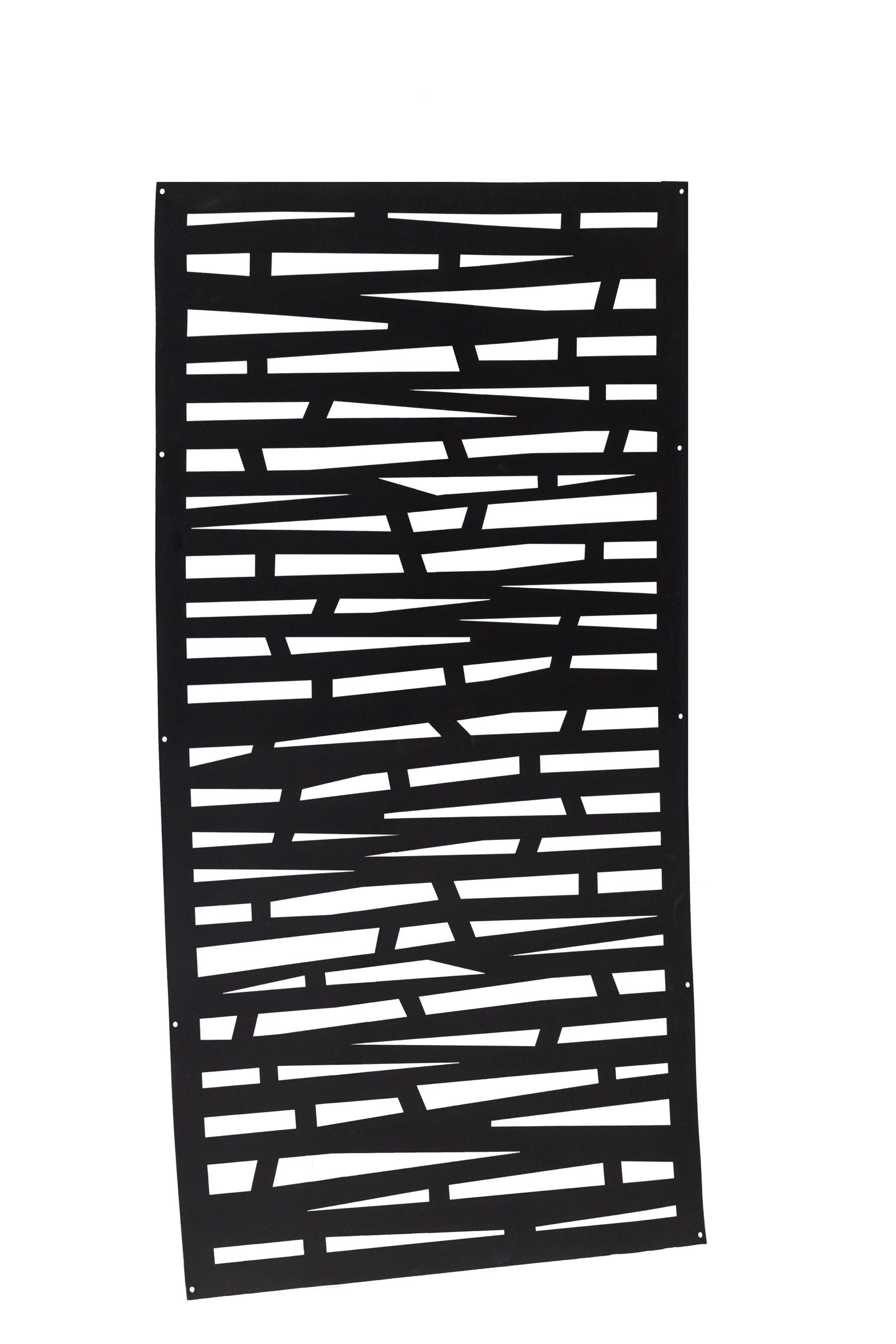
Panels are laser cut from 6063-T6 aluminum and powder-coated black, in three patterns (Nature, Linear and Signal) and two widths (36" and 24"). Signal gives the most privacy, then Linear, then Nature. If your HOA has rules about how "solid" a screen can look, the pattern you choose matters as much as the height. See choosing a privacy panel pattern for a side-by-side look.
Privacy screens are not railings
Important: PrivacyPlus+ panels can't currently be used as the only railing or guard section on a deck that is 31 inches or more off the ground. A deck at that height also needs a certified, IRC-compliant railing. Plan your privacy screen alongside that railing, not in place of it, and ask your contractor and building department what your deck requires.
Do you need a permit for a deck privacy screen?
Sometimes. It depends on where you live and how the screen is built. Some towns require a permit for structures attached to a deck, and some set height limits for walls, screens or fences, especially near a property line.
A privacy screen on a deck also catches wind and adds load to the deck. That's one reason your contractor, not a one-size-fits-all rule, should decide post locations and mounting for your site. PrivacyPlus+ panels attach to posts, and the posts mount on a deck, a concrete patio or another solid, secure surface.
The simplest step is to call or visit your local building department before work starts and describe the project: where the screen will go, how tall it will be, and what it's attached to. If a permit is needed, they'll tell you what they want to see. If your deck is 31 inches or more off the ground, see Privacy screens are not railings above: you'll also need a certified, IRC-compliant railing.
HOA rules: what to check before you build
If you live in a neighborhood with an HOA, read the covenants or architectural guidelines before you order anything. HOAs commonly have rules about:
- Height. Maximum heights for fences, walls and screens, which may be different on a deck than at ground level.
- Color and material. Some communities list approved colors or materials. PrivacyPlus+ panels come in black powder-coated aluminum.
- Placement. Setbacks from property lines, or limits on screens visible from the street.
- Approval process. Many HOAs want a written request, a sketch or photo, and product details before you build.
A privacy screen is not the same as a privacy fence, and some HOAs treat them differently. Our guide to privacy screen vs. privacy fence explains the difference, which can help when you describe your project.
Questions to bring to your HOA or building department
Bring these with you, and get answers in writing where you can:
- Is there a maximum height for a privacy screen on a deck? Is it measured from the deck surface or from the ground?
- Does a screen attached to a deck need a permit?
- Are there setback rules near the property line?
- Are there color or material requirements?
- What do you need from me to approve it: a drawing, photos, product information?
For product details, the Privacy Panels page lists patterns and sizes, and the Installation page shows how the posts, brackets and panels go together. If your screen closes off a corner or the stairs, a matching privacy gate keeps a way through; each gate includes hinges, a latch and a self-closing closure unit. Panel hardware (posts and brackets) is sold separately; see the Hardware page.
Where to see PrivacyPlus+ in person
Once you know what your HOA and town allow, the next step is seeing the panels up close. PrivacyPlus+ is available at Decks & Docks, with displays at 10 Midwest showrooms. Find a Decks & Docks showroom, or ask your contractor. For more ideas, see our deck privacy screen page and the FAQ.
See it at a Decks & Docks showroom, or ask your contractor.
Recent Posts