Privacy Screen vs. Privacy Fence: Which Fits Your Deck or Patio?
If the neighbors can see your patio table from their kitchen, your first thought might be a fence. Often a privacy screen does the job better, with less work and less wall. Here's how the two differ and how to tell which one your space needs.
The Short Answer
- A privacy fence marks and encloses a property. It usually runs along the lot line, sets posts in the ground, and is about boundaries, pets and keeping people out.
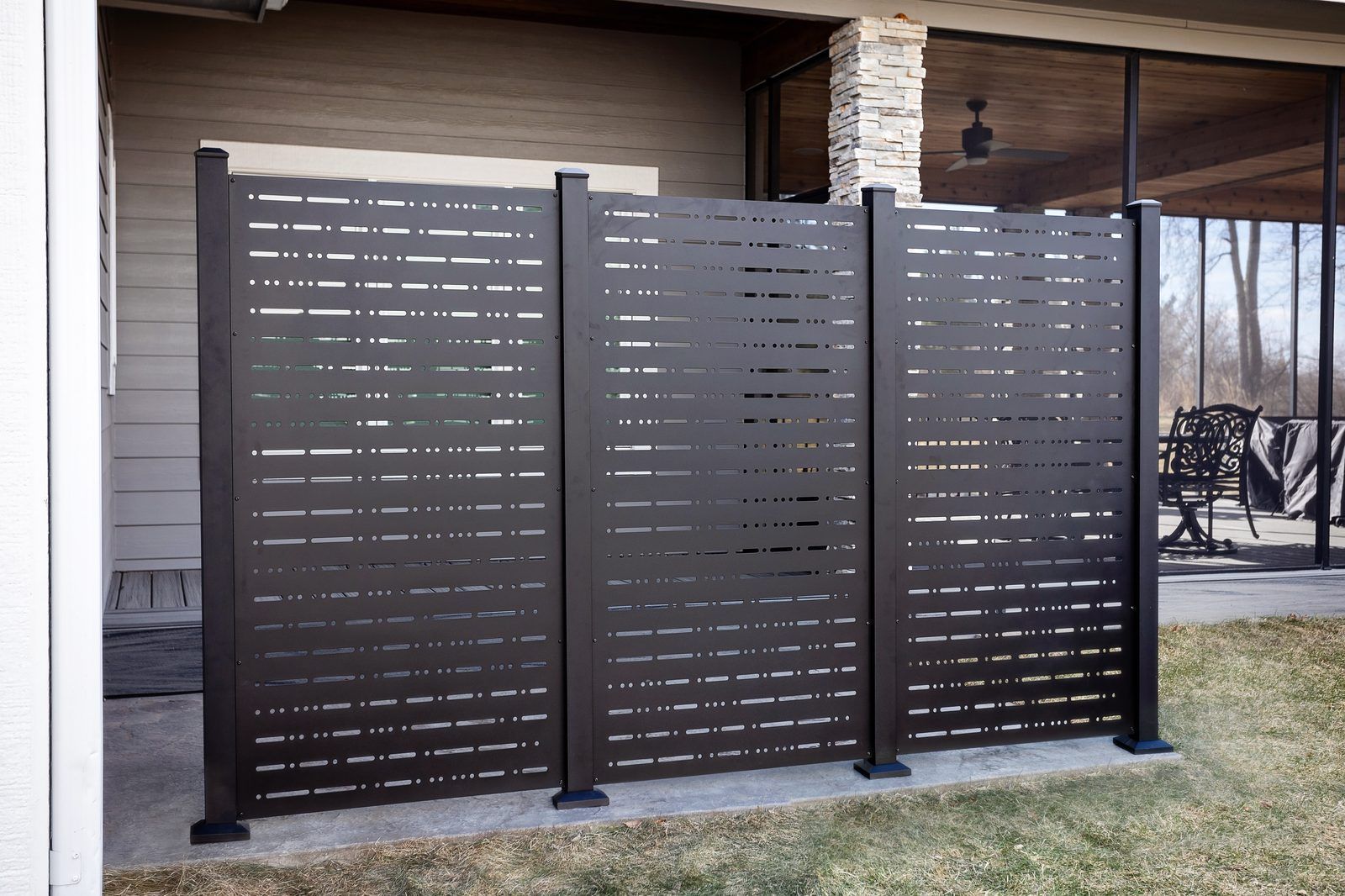
- A privacy screen (also called a privacy panel or privacy wall) blocks a specific view. It goes where you sit: on a deck, beside a patio, around a hot tub or in front of the pool equipment.
Many yards need a fence for the boundary and a screen for the spot that matters most. Some only need the screen.
Privacy Screen vs. Fence, Side by Side
| Privacy screen | Privacy fence | |
|---|---|---|
| Purpose | Blocks a specific sight line | Encloses and marks the property |
| Where it goes | Deck, patio, hot tub, equipment pad | Usually along the property line |
| Length | A few panels to a short run | The length of the lot line |
| How it mounts | On the deck, patio or another solid surface (varies by product) | Usually posts set in the ground |
| Rules | HOA and local rules can apply | HOA, permit and property-line rules usually apply |
Why a Screen Can Beat a Fence for Privacy
Privacy is about sight lines, and sight lines are shortest close to where you sit. A tall fence at the back of the yard can still leave your deck in view of a neighbor's upstairs window or raised deck. A screen next to your seating area blocks the view right where it starts. Because it's close, a short run often hides more than a long fence would.
Screens also let you keep what you like about the yard. You can block the neighbor on one side and leave the view of your garden or the lake open on the other.
When a Fence Makes More Sense
- You need to enclose the yard for kids or pets.
- You want to mark the property line.
- You need privacy across the whole yard, not one spot.
If local rules require a barrier around a pool or hot tub, talk with your contractor and building department about what qualifies. Don't assume a screen or a fence meets the requirement.
Privacy Panel vs. Fence: Upkeep and Materials
Both screens and fences come in wood, vinyl, composite and metal. Wood looks warm at first but needs staining or sealing and can rot or warp over time. Aluminum doesn't rot or warp, and a powder-coated finish skips the painting and staining. See aluminum vs. steel vs. wood vs. composite privacy screens for the full comparison.
Privacy Wall vs. Fence: Rules to Check
Fences often need a permit and must respect setbacks from the property line. Screens attached to a deck can need a permit too, and HOAs may limit height, color and placement for both. Check with your HOA and building department before you choose.
Where PrivacyPlus+ Fits
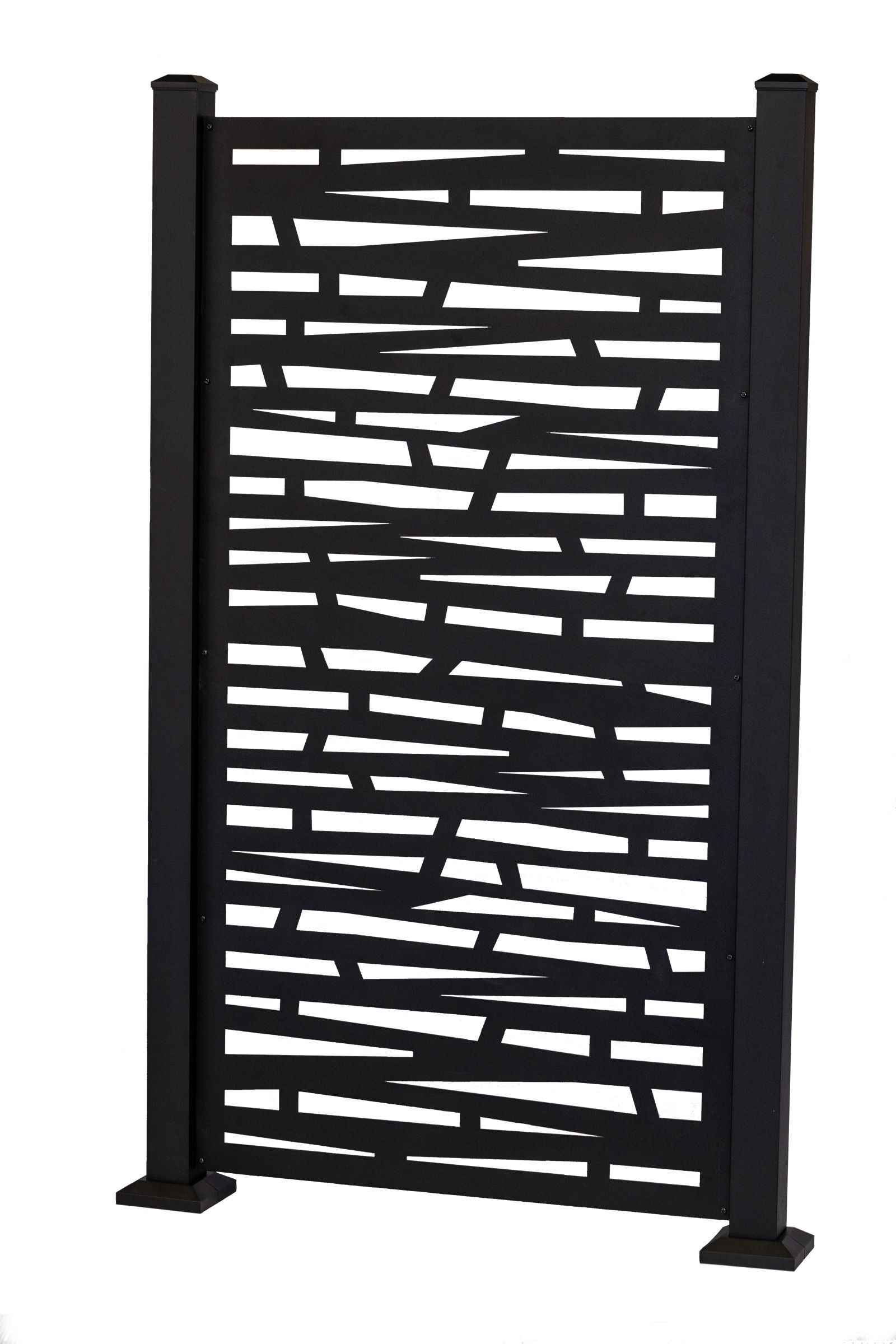
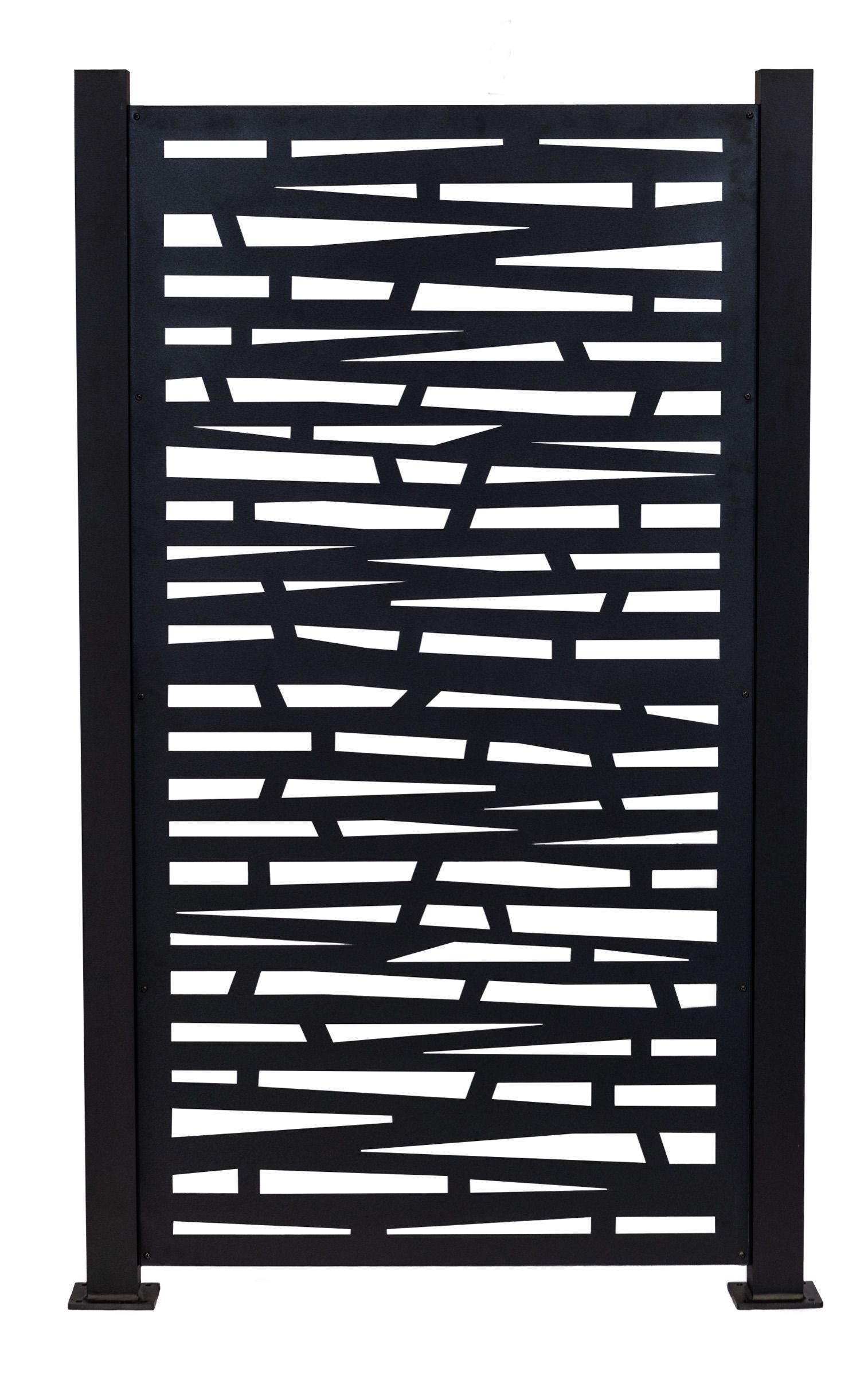
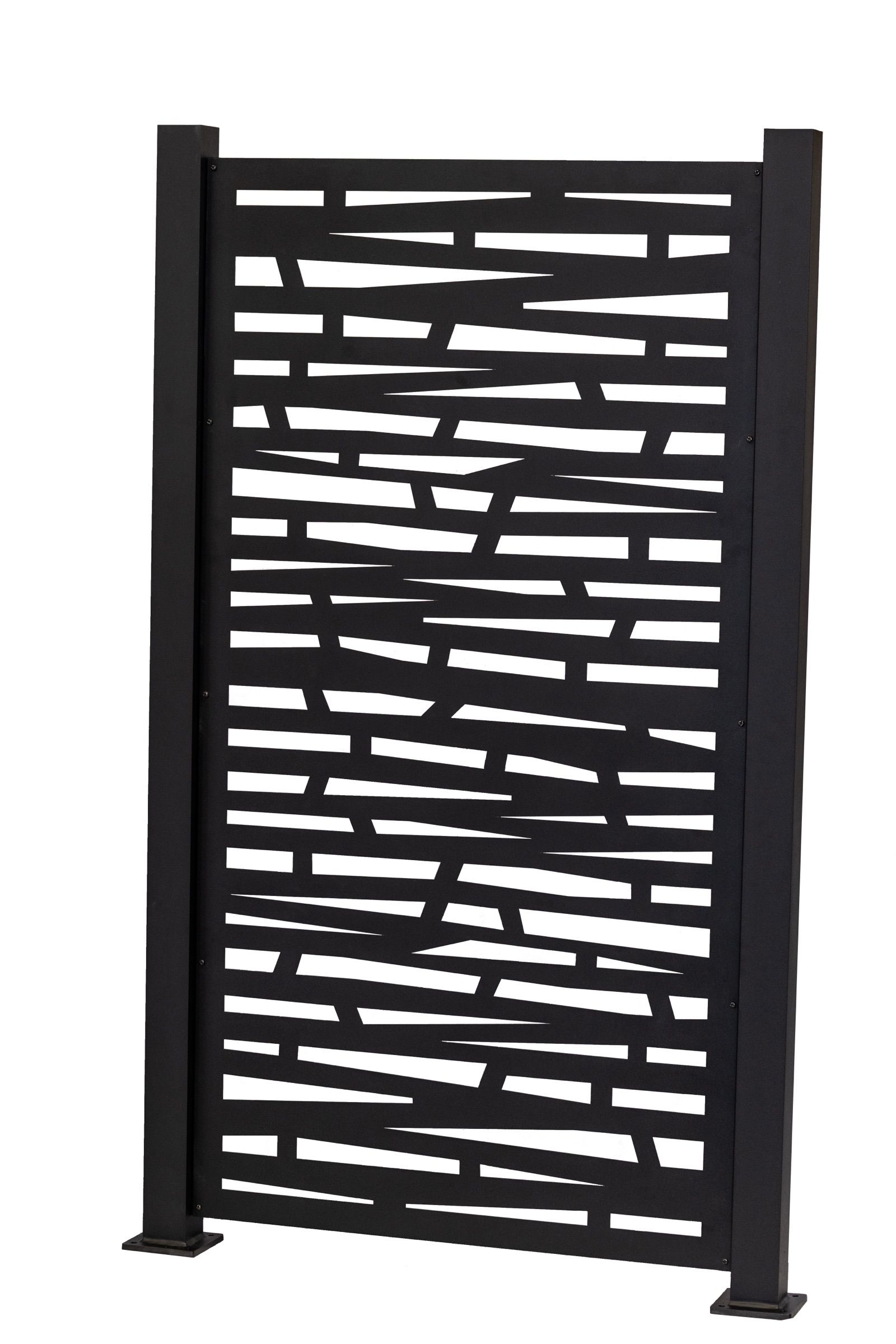
PrivacyPlus+ makes aluminum privacy panels for the screen side of this choice. Panels are laser-cut 6063-T6 aluminum, powder-coated black, in three patterns (Nature, Linear and Signal) and two sizes, 36" x 68" and 24" x 68". Panels attach to 72" posts, and the posts mount on a deck or a concrete patio (with concrete screws on concrete), so there's no digging along a lot line. Matching laser-cut gates keep a way through.
Common projects: a deck privacy screen, a patio privacy screen, a hot tub privacy screen and a pool equipment screen.
See It at a Decks & Docks Showroom
PrivacyPlus+ doesn't sell directly to homeowners; it's available at Decks & Docks. All 10 Decks & Docks showrooms carrying PrivacyPlus+ are in the Midwest, and each one has a display. Stop in to see the panels and decide whether a screen will do the job.
Contractors and dealers: Contact our team about PrivacyPlus+.
FAQ
Is a privacy screen the same as a privacy fence?
No. A fence usually runs along the property line and encloses the yard. A privacy screen blocks a specific view, close to where you sit, on a deck, patio or around a hot tub.
Do I need a permit for a privacy screen?
It depends on where you live and how the screen attaches. Check with your HOA and local building department before you start.
Can a privacy screen replace a fence?
For blocking a view, often yes. For enclosing a yard, marking a property line or meeting a barrier rule, you may still need a fence. Check local rules.
Recent Posts