Aluminum vs. Steel vs. Wood vs. Composite Privacy Screens
The material you choose for a privacy screen decides how it looks in five years, how much weekend time it eats, and how it handles rain, sun and snow. Here's a plain comparison of the four common choices for an outdoor privacy screen: aluminum, steel, wood and composite.
Quick Comparison
| Aluminum | Steel | Wood | Composite | |
|---|---|---|---|---|
| Rot and warping | Won't rot or warp | Won't rot | Can rot, warp and split | Resists rot; can move with heat |
| Rust | Doesn't rust the way steel does | Can rust where the coating is damaged | n/a | n/a |
| Upkeep | Wash it; powder coat means no painting | Touch up chips to stop rust | Stain or seal on a schedule | Wash it; color can change over time |
| Weight | Light | Heavy | Moderate | Heavy for its size |
| Look | Clean, modern; cut patterns | Industrial or decorative | Warm, natural | Wood-look boards |
Metal Privacy Screens for Outdoor Use
Aluminum
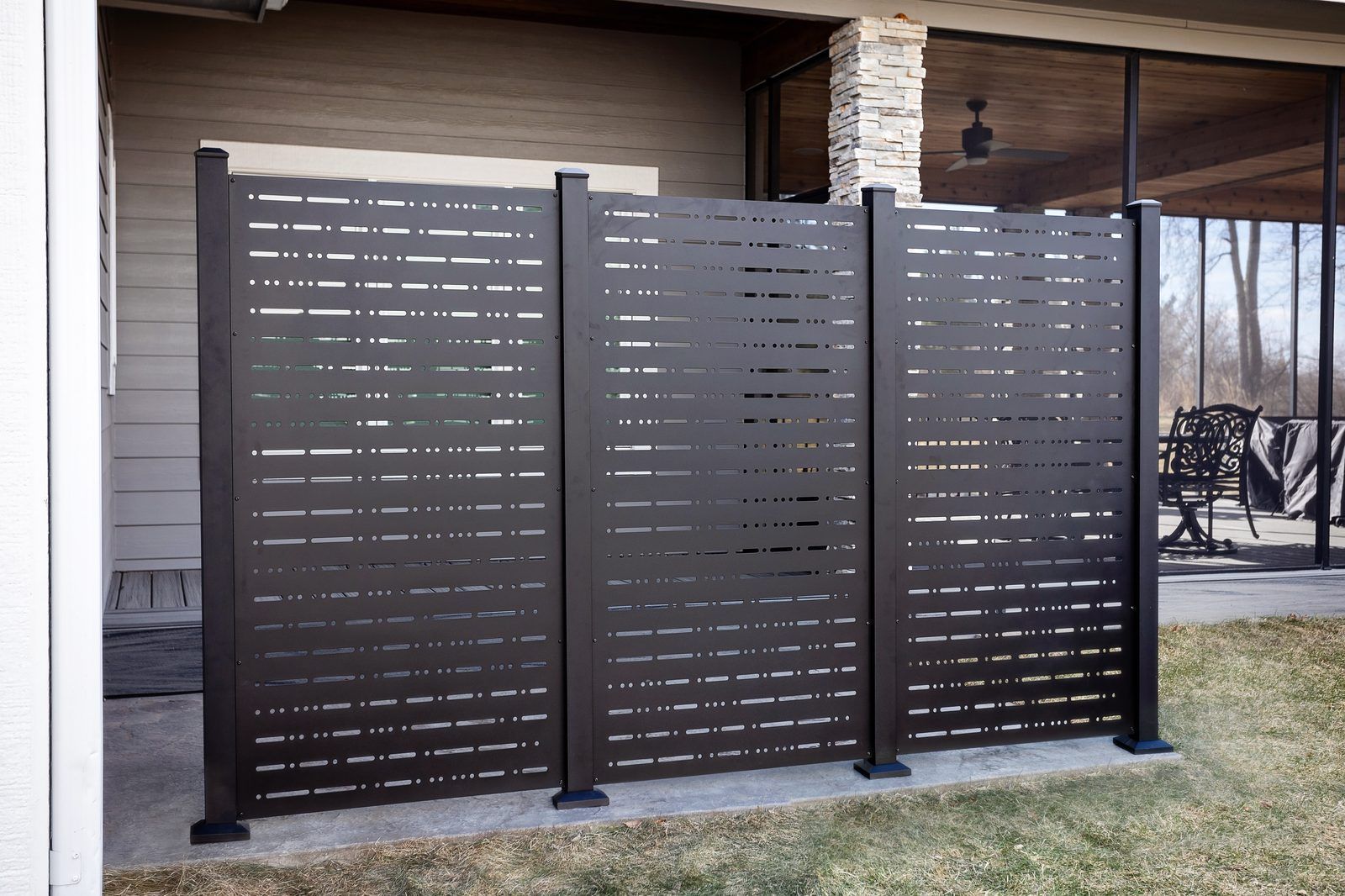
Aluminum is light, strong for its weight, and doesn't rust the way steel does. With a powder-coated finish, it never needs painting, staining or sealing. A light panel is also easier on a deck than a heavy one. That makes aluminum a natural fit for a modern, laser-cut privacy screen outdoors.
Steel
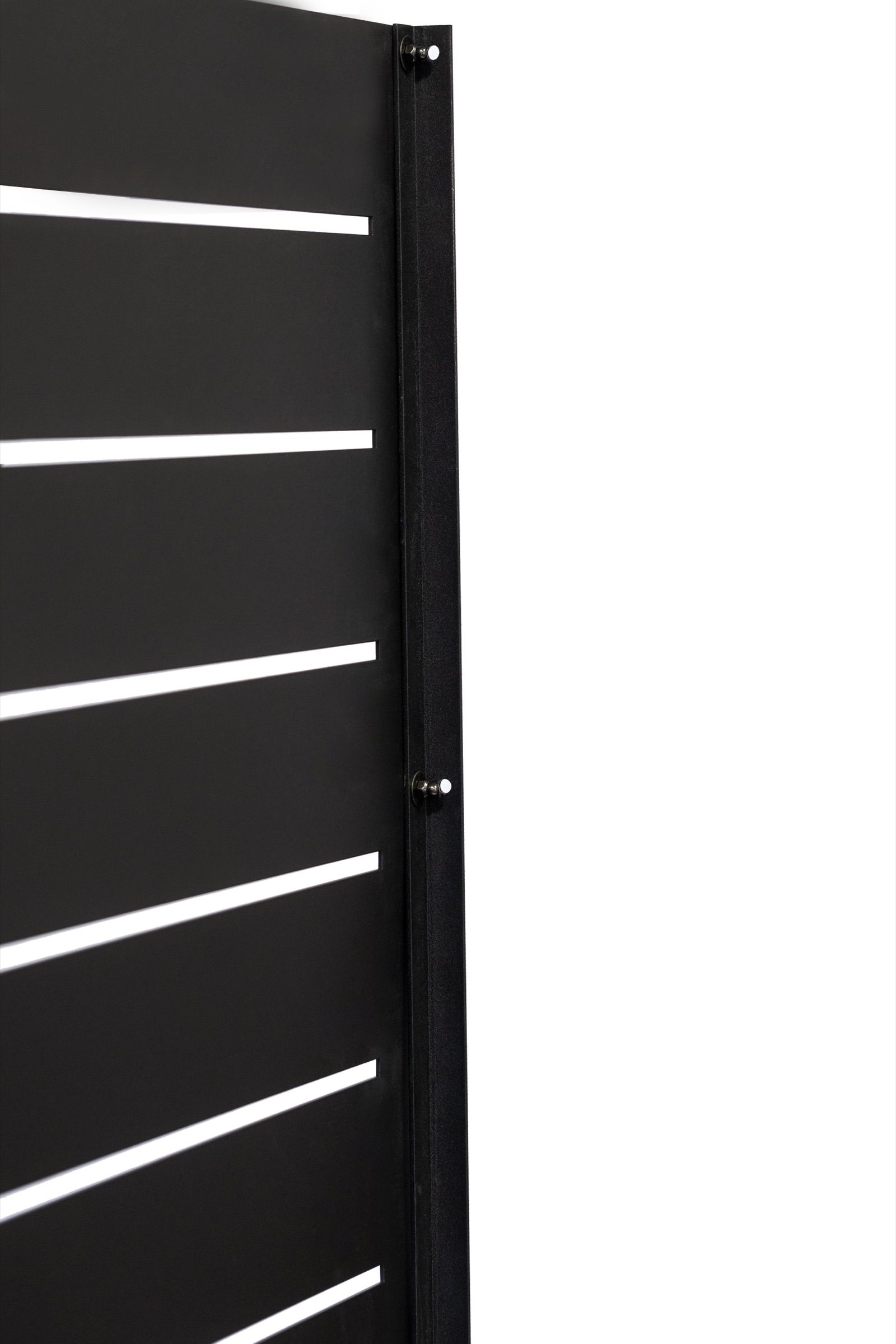
Steel is strong and heavy. It makes sense for freestanding screens and decorative panels, but bare or scratched steel rusts, so the coating needs care. Some steel screens are designed to weather to a rust finish on purpose; that finish can stain the surface beneath it. The weight also matters if the screen mounts on a deck.
Wood Privacy Screens
Wood looks warm and natural and is easy to build with. The trade-off is upkeep. Wood needs stain or sealer on a schedule, and over time it can rot, warp, split and fade, especially near a hot tub, a sprinkler or the ground. If you love wood, plan for the maintenance.
Composite Privacy Screens
Composite boards mix wood fibers and plastic. They resist rot better than wood and don't need staining. They can be heavy, they can expand and contract with heat, and the color can change with years of sun. Composite screens usually look like wood boards rather than a patterned panel.
Aluminum vs. Wood Fence and Screen: The Big Difference
Most people comparing aluminum vs. wood are really comparing upkeep. Wood asks for work every few seasons. A powder-coated aluminum screen asks for a wash with soap and water. If a low maintenance privacy screen is the goal, aluminum is hard to beat.
How to Choose
- Want the least upkeep? Powder-coated aluminum.
- Want a natural wood look and don't mind maintenance? Wood.
- Need a heavy, freestanding screen? Steel may fit.
- Want wood-look boards with less upkeep than wood? Composite.
Whatever you pick, check with your HOA and building department, and have your contractor plan how the screen mounts.
The PrivacyPlus+ Approach
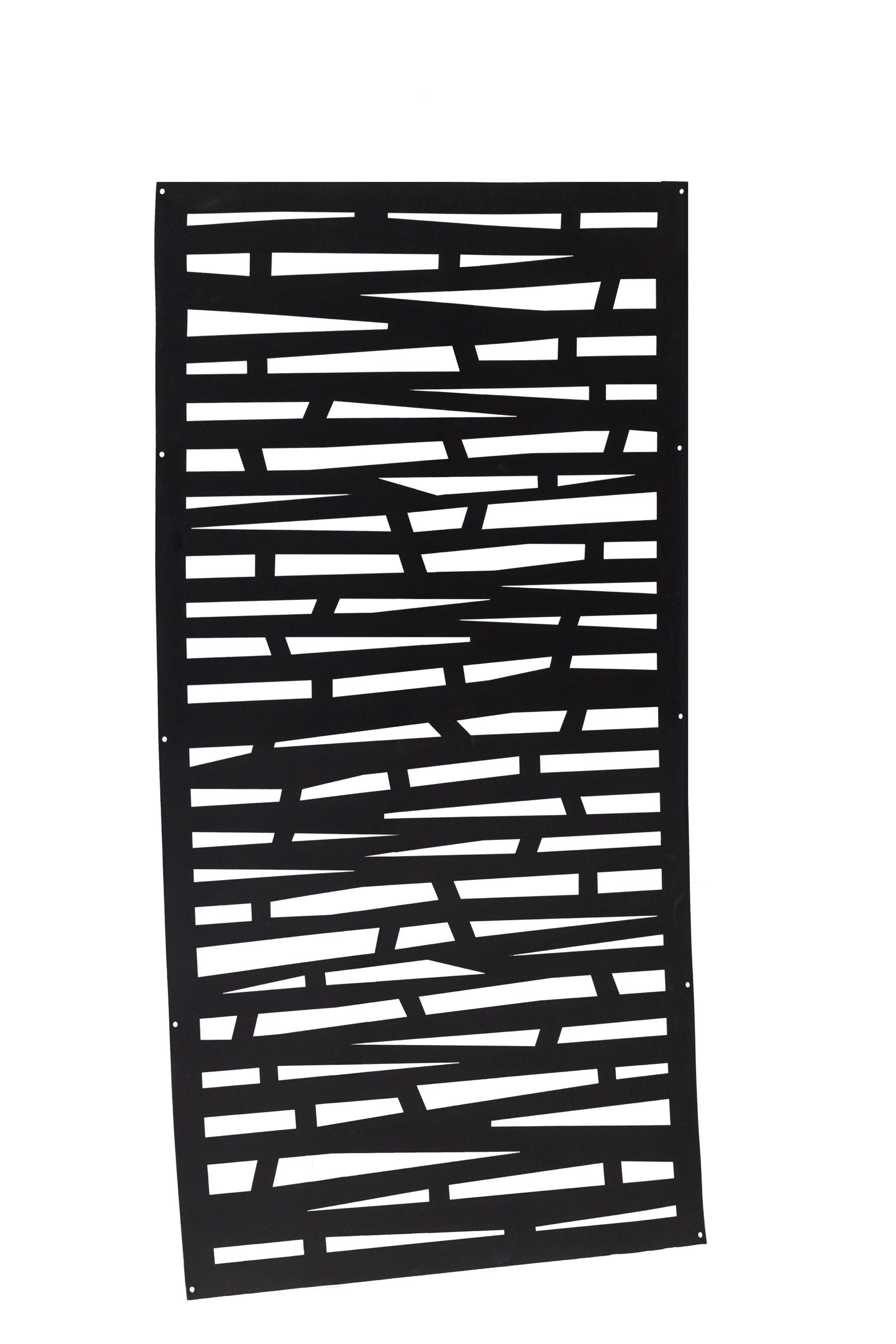
PrivacyPlus+ aluminum privacy panels are laser-cut from 6063-T6 aluminum, a commercial-grade structural aluminum, and powder-coated black. They won't rot, warp or decay, and they never need painting, staining or sealing. Choose from three patterns, Nature, Linear and Signal, in 36" x 68" and 24" x 68" panels, with matching gates. Posts, brackets and powder-coated stainless steel fasteners are sold separately, and your contractor can install the modular system in hours, not days.
Use them for a deck privacy screen or a patio privacy screen, and see choosing a privacy panel pattern for help with the look. Still deciding between a screen and a fence? Read privacy screen vs. privacy fence.
See It at a Decks & Docks Showroom
PrivacyPlus+ doesn't sell directly to homeowners; it's available at Decks & Docks. All 10 Decks & Docks showrooms carrying PrivacyPlus+ are in the Midwest, and each one has a display, so you can see and feel the aluminum up close.
Contractors and dealers: Contact our team about PrivacyPlus+.
FAQ
What is the lowest-maintenance material for a privacy screen? Powder-coated aluminum. It won't rot or warp, doesn't rust the way steel does, and needs only an occasional wash with soap and water.
Is aluminum or steel better for an outdoor privacy screen? Aluminum is lighter and doesn't rust the way steel does, which makes it a good fit on decks. Steel is heavier and needs its coating kept intact to prevent rust.
Is aluminum better than wood for a privacy screen? If upkeep matters, yes. Wood needs regular staining or sealing and can rot or warp. Powder-coated aluminum needs neither.
Recent Posts